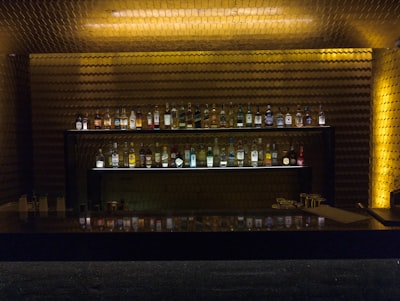
Lehmitz
Lehmitz is a Reeperbahn dive bar that became internationally famous after Swedish photographer Anders Petersen spent several years documenting its regulars in the late 1960s and early 1970s. The resulting photo book, Cafe Lehmitz, is one of the most celebrated works of 20th-century street photography, and the bar has traded on that reputation ever since. The current incarnation is not the original; the bar moved and changed hands several times, but it retains the spirit of a 24-hour working-class drinking spot. The interior is dim, cluttered, and unpretentious, with a long bar along one wall, a few tables, and a clientele that still includes some of the old St. Pauli characters alongside curious tourists and night-shift workers. Beer is cheap, the jukebox plays a mix of Schlager and rock, and conversations range from the philosophical to the incoherent depending on the hour. It's not a polished experience, but it's a genuine one, and the photographic history gives it a weight that most dive bars lack.

Where to stay near Lehmitz
Hotels close to Herbertstrasse, Hamburg.
See places to stay and current pricesWhat to Expect
A small, dim room with mismatched furniture, a jukebox playing anything from Udo Jurgens to The Rolling Stones, a bar populated by a mix of regulars, night-shift workers, and the occasional tourist. Smoke is heavy, conversations are loud, and the windows are fogged most of the time.
Authentic Reeperbahn dive, rough and unglamorous.
Jukebox mix of Schlager, German rock, 60s and 70s pop, classic blues
Very casual. Dress down if anything.
Travelers curious about old St. Pauli, night owls, photography fans who know the Petersen book.
Cash strongly preferred
Price Range
Beer 3.50-4 EUR, spirits 3-4 EUR, simple food 5-8 EUR
Beer ~$3.80-4.30, spirits ~$3.20-4.30, food ~$5.40-8.60
Hours
24 hours daily
Insider Tip
Bring cash; the card machine is often out of order and nobody is fixing it tonight. Don't come expecting a themed photography experience; the Petersen book is rarely mentioned inside. Early morning hours have the most interesting crowd for anyone curious about old St. Pauli.
Full Review
Lehmitz has more history than most Hamburg venues and fewer airs about it than any of them. The bar sits on Reeperbahn in a narrow storefront that doesn't announce itself, and first-time visitors often walk past the door before realizing they've arrived. Inside, the lighting is low, the ceilings are yellowed from decades of cigarette smoke, and the layout hasn't changed meaningfully in years.
The 24-hour opening is the defining feature. At 4 PM on a Tuesday you'll find a handful of regulars nursing beers, at 3 AM on a Saturday you'll find a packed room with the jukebox on full volume, and at 8 AM you'll find the night-shift crowd winding down while early risers start their day. This continuous operation gives the bar a texture that scheduled venues cannot match, and it remains one of the few places in central Hamburg where the social rhythms of the old district still play out.
Compared to the curated Reeperbahn bars that have opened in recent years, Lehmitz is stubbornly unmarketed. There is no cocktail program, no Instagram wall, no concept beyond selling drinks to whoever walks in. The Petersen photographs occasionally draw photography pilgrims, but the bar does not lean into that history aggressively. Regulars seem mildly amused when someone asks about the book and mostly go back to their conversations.
Approach with respect, drink your beer, and don't photograph people without asking. The crowd can be rough around the edges but is rarely hostile to visitors who keep to themselves. Early mornings, between roughly 4 AM and 8 AM, offer the most characterful atmosphere if you're specifically interested in the Reeperbahn that existed before the current tourism wave.
Food options are limited to basic snacks and occasional simple dishes, nothing that competes with a proper restaurant. The toilets are functional but not kept to a high standard, which is consistent with the rest of the operation. Wallets and phones belong in front pockets; the bar is crowded enough that pickpocket risk is real and the clientele is not uniformly trustworthy. Despite all of that, the venue remains one of the few places where the layered history of St. Pauli feels present rather than curated.
The Neighborhood
Lehmitz is on Reeperbahn itself, within the central strip of the red-light district. Herbertstrasse is a short walk east, Davidwache police station is two minutes away, and the S-Bahn Reeperbahn station is at the western end of the street.
Getting There
S-Bahn S1 or S3 to Reeperbahn station, then walk east along Reeperbahn for about four minutes. U-Bahn U3 to St. Pauli also works. Night buses on line 6 stop along the street.
Address
Reeperbahn 22, 20359 Hamburg
Other Venues in Herbertstrasse
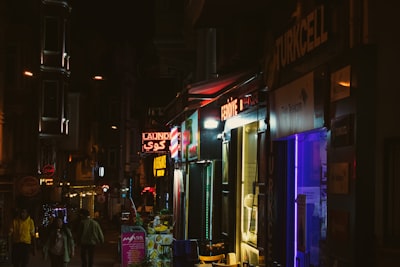
Dollhouse
One of Hamburg's best-known go-go clubs, operating since the 1970s on Grosse Freiheit. Multiple floors with rotating stage shows and table seating.
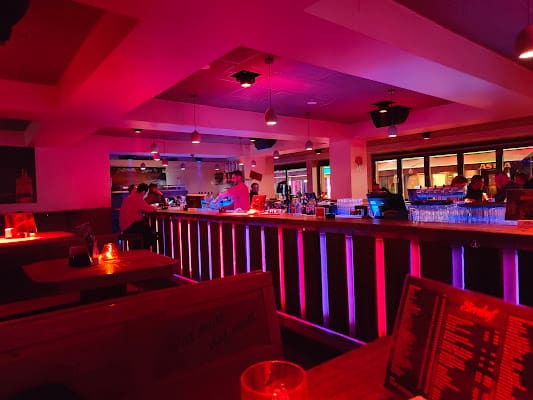
Safari
Long-running go-go bar a short walk from Herbertstrasse. The neon-lit exterior is a fixture of the Grosse Freiheit strip.
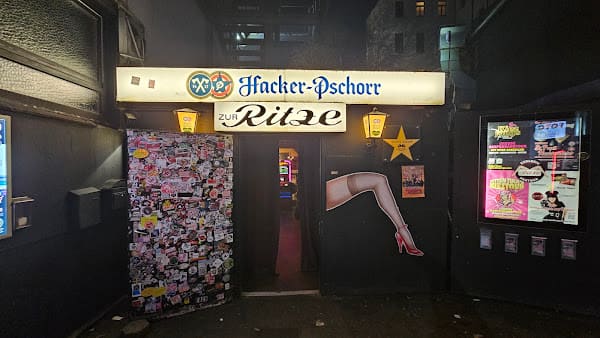
Zur Ritze
Legendary St. Pauli dive bar with a full boxing ring in the basement. A neighborhood institution since 1962, popular with locals and tourists alike.
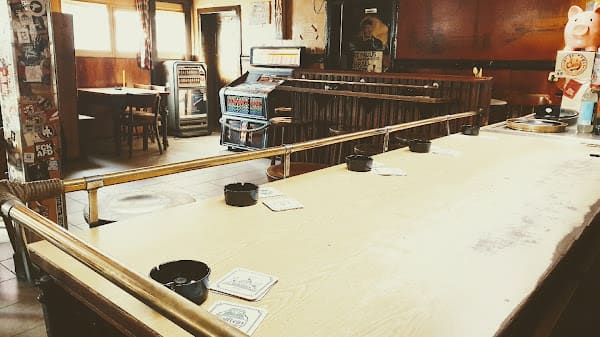
Silbersack
Old-school corner bar on a quiet side street behind the Reeperbahn. No frills, cheap drinks, and a loyal local crowd that keeps the jukebox running.
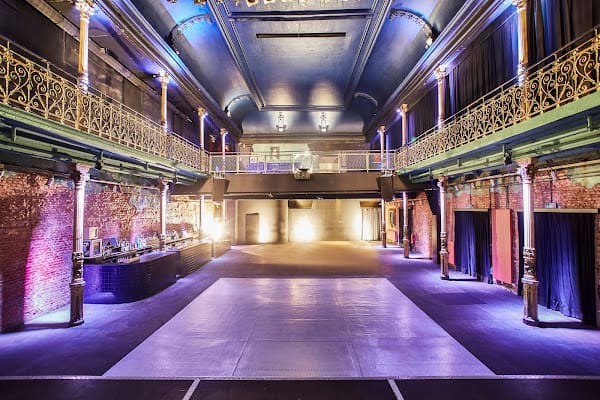
Gruenspan
Concert venue operating since the 1960s, when it hosted acts during Hamburg's beat music era. Still books live bands and DJ nights across genres.
Golden Pudel Club
Legendary DIY club on the harbor waterfront below the Hafenstrasse. Experimental music, noise acts, and leftfield DJs play in a rough wooden shack with views of the Elbe.